Knowledge base
Iftar recipes: what to put on the table after a day of fasting
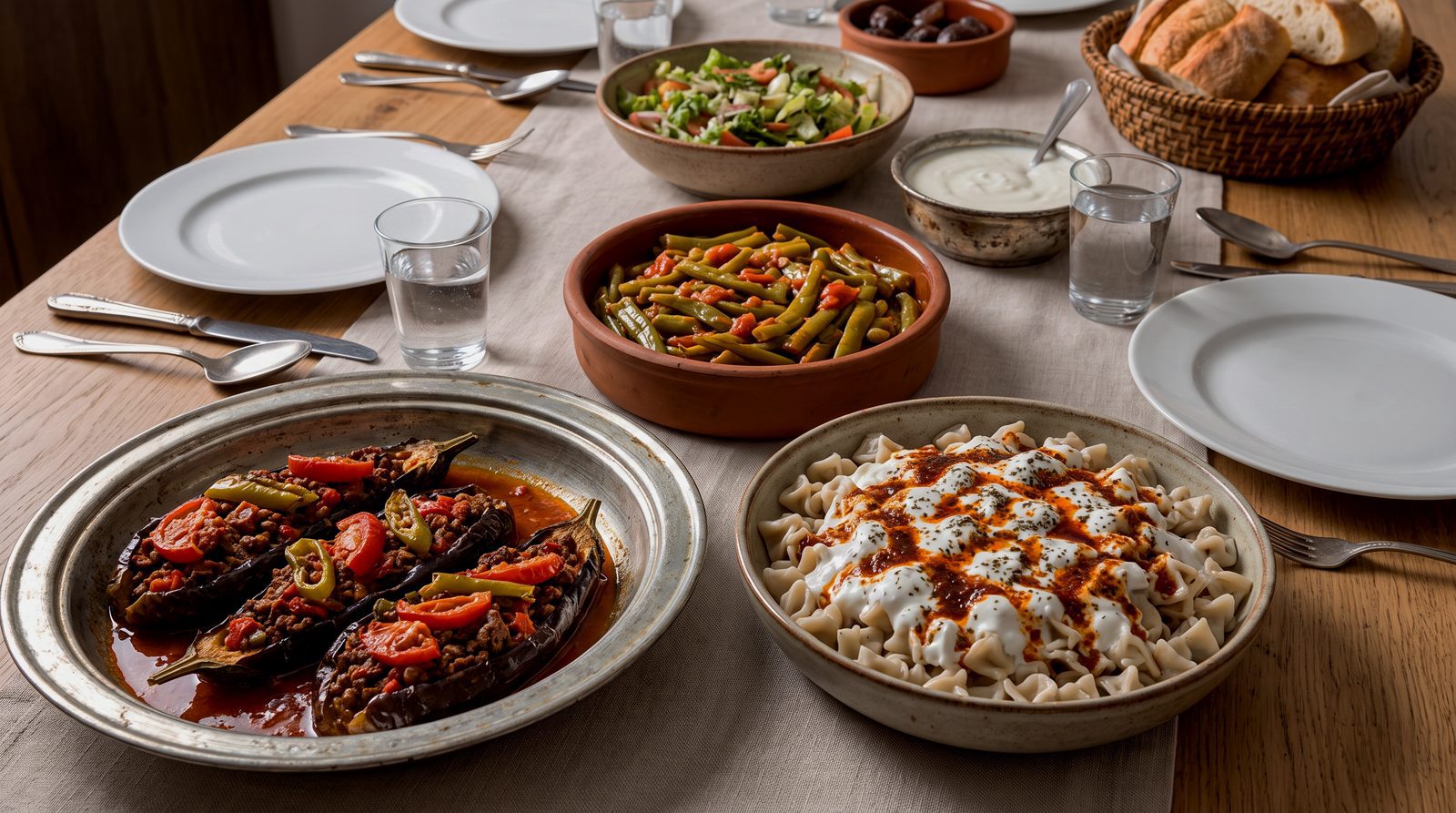
Dates, soup, a main dish, something sweet: this goes on the table at iftar. The Turkish dishes that sit well after the break, and what to pick when time is short.
Breaking the fast itself takes a minute. A date, a glass of water, sometimes a spoonful of soup straight away. Then everyone sits down and the question that really matters comes up: what else is on the table.
Below is what fills an iftar table, in the order it is eaten. No cooking instructions — the dishes themselves, and why they sit well after a day without food.
How an iftar is traditionally built up
An iftar follows almost the same order everywhere, and that order is no accident.
- Breaking the fast. Dates and water. Small, sweet and immediate.
- Soup. In Turkish cooking, çorba is the real start of the meal. Warm, light, eaten with a spoon.
- The main dish. Usually a sulu yemek, a dish with sauce, with rice, bulgur or bread alongside.
- Something sweet and tea. Often only later in the evening, not straight after the main dish.
In many homes there is a pause between the soup and the rest: first the soup, then the prayer, then the main dish. In practice that is the most important feature of an iftar table — it is eaten in two steps, not in one go. Dishes with sauce that can wait half an hour therefore do better than anything that has to come straight off the grill or out of the pan.
What is already on the table when everyone comes in matters just as much: bread, olives, cheese and small bowls to share. Ezme (finely chopped tomato and green pepper with spring onion), sigara böreği (crisp pastry rolls) and içli köfte (stuffed köfte) are the classics. They fill the gap between the date and the real food, and that is exactly their job.
Soups to open with
The soup is the first warm thing you eat, and in many Turkish homes it is on the table every evening of the month. Four that do it well.
- Mercimek çorbası (red lentil soup). Soft red lentils with potato, carrot and a hint of cumin. If you pick one, pick this one.
- Ezogelin çorbası (lentil soup with bulgur and rice). Heartier than mercimek, with a fresh note of lemon. For evenings when the main dish is light.
- Yayla çorbası (yoghurt soup with mint). Creamy and fresh at the same time, finished with butter. A very different start from the tomato-red soups.
- Tarhana çorbası (soup with a lightly sour, fermented base). The homeliest of the four, and the most pronounced in flavour.
There is a reason the soup goes first and not the meat: it is warm, you eat it slowly, and it fills you without a full plate landing in front of you straight away.
Main dishes that work well at iftar
The main dish comes after the pause. That means it has to be able to wait without going downhill — and that it is the second round of the evening, not the first bite. Dishes with sauce do that best.
- Etli güveç (stew from the oven). Meat and vegetables that cook slowly together. The dish that copes best with waiting and reheating. We explained earlier what güveç actually is.
- Karnıyarık (stuffed aubergine with minced meat). Aubergine filled with spiced minced veal, tomato and pepper. It looks like a dish for guests, but it is just as ordinary on a weekday. More about it: what karnıyarık is.
- Sarma (stuffed vine leaves). Rolled vine leaves with rice, onion and parsley, cooked with lemon and olive oil. Fresh and slightly sour, which cuts through the heavier dishes on the table. Read also: what sarma is.
- Etli kuru fasulye (white beans in tomato sauce). White beans with veal in salça sauce. The dish that comes back every week in many Turkish homes, and a full meal with pilav alongside it. Background: what kuru fasulye is.
- Biber dolması (stuffed peppers). Peppers filled with spiced rice. One per person next to another dish works better than a plate full.
- İmam bayıldı (aubergine in olive oil, without meat). Entirely plant-based, which makes it the answer for the evening when someone who does not eat meat joins the table. The story behind the name is in a separate article.
And the base underneath it: pirinç pilavı (baldo rice with orzo) or bulgur pilavı. Neither is a side dish in the Dutch sense of the word — they belong to the dish, not beside it. Our article on Turkish rice dishes and pilav covers the other varieties.
If you are short of time
The easiest iftar is not the quickest recipe. It is the shortest list.
- Pick something where the soup and the main dish blend into one. Sulu köfte, meatballs in broth, is both at once and goes in one pan.
- Serve one dish instead of three. A stew with pilav and bread is a complete table. The rest is decoration.
- Do not leave the decision until four in the afternoon. That is the real time problem, and no recipe fixes that. How to arrange that in advance, with a weekly menu for seven evenings, is in how to plan an iftar menu.
If you would rather hand the evenings over entirely, we set out the options in iftar without cooking.
Something sweet to finish
The sweet comes later, usually with tea, and often only once the table has been cleared. Two names keep coming up.
Baklava is the best known: thin layers of pastry with nuts and syrup. We wrote earlier about what baklava actually is and where it comes from. During Ramadan you also see a lot of soğuk baklava, the cold version with milk — a lighter finish after a full table.
Künefe is the other: fine kadayıf strands with melted cheese between them, served warm with syrup. You eat it straight out of the pan, so it is a dish for the table and not something to get ready in advance.
This is also the part most people do not make themselves. We went through the addresses in Amsterdam and Rotterdam.
We cook everything chilled fresh, 100% halal and never from the freezer, so you heat it through in five minutes. Have a look at the full menu to see what can go on the table each evening.
Frequently asked questions
What do you eat at iftar?
An iftar starts with dates and water, then comes soup, then a main dish with rice, bulgur or bread, and later in the evening something sweet with tea. In Turkish cooking, mercimek çorbası, güveç, karnıyarık, sarma and kuru fasulye come back most often.
What do you break the fast with?
With dates and water, usually followed straight away by a bowl of soup. It is small and warm, and it gives the table time to be completed before the main dish arrives.
Which soup belongs at an iftar?
Mercimek çorbası, red lentil soup, is the most eaten. Ezogelin çorbası is heartier because of the bulgur and rice, yayla çorbası is a yoghurt soup with mint, and tarhana çorbası has a lightly sour, fermented base.
What are easy iftar recipes?
Pick dishes with sauce that can wait half an hour: güveç, kuru fasulye and karnıyarık do not go downhill between the soup and the main dish, and they reheat well. Sulu köfte is soup and main dish in one pan.
What goes on an iftar table next to the main dish?
Bread, olives, cheese and small bowls to share: ezme, sigara böreği and içli köfte. Alongside that, pirinç pilavı or bulgur pilavı, which in Turkish cooking belongs to the dish and does not stand separately beside it.
Which dessert belongs at iftar?
Baklava and künefe are the best known. During Ramadan, soğuk baklava, the cold version with milk, is popular too. The sweet usually comes later in the evening with tea, not straight after the main dish.