Knowledge base
What is sarma? Stuffed vine leaves explained
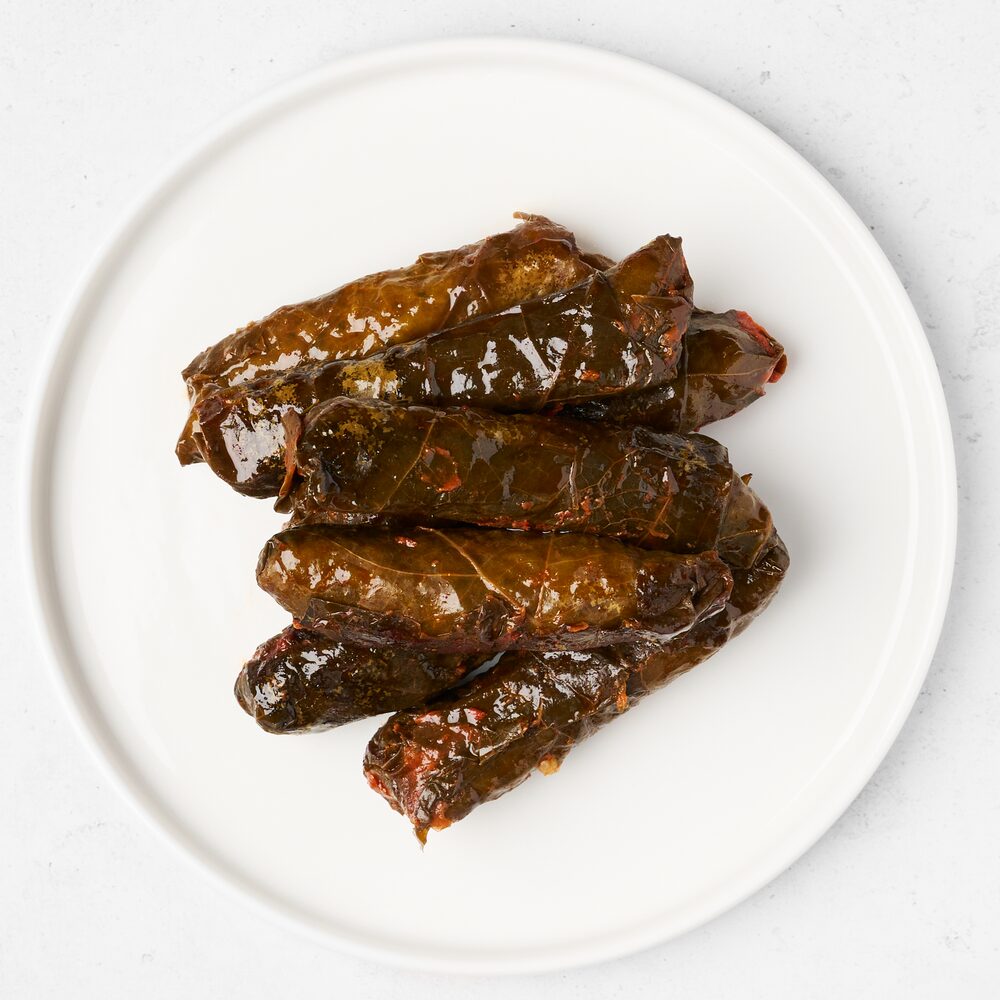
Sarma (stuffed vine leaves) explained: the difference with sarmale, what goes into the filling and whether you eat it warm or cold. Fresh and halal.
If you grew up with Turkish or Mediterranean cooking, you know the picture: the whole afternoon at the kitchen table, a pile of vine leaves, and mum (anne) or grandma rolling one little parcel after another. Calm, patient, dozens at a time. Sarma is not a dish you make in a hurry; it is a small ritual. And that is exactly why so many people miss it when they no longer make it themselves.
At Yasemin we still roll our sarma the traditional way, by hand, 100% halal and freshly prepared. For anyone who wants that feeling of home without setting aside an afternoon for it. But first let us explain what sarma actually is, because there is surprisingly much confusion about it.
What is sarma? (stuffed vine leaves)
Sarma literally means “rolled up” in Turkish. In English it is often known as stuffed vine leaves: young grape leaves filled with a mixture of rice, onion, fresh herbs and sometimes minced meat, then rolled tightly into small, elegant rolls. They are cooked slowly until soft and full of flavour.
The full name is often yaprak sarma (yaprak = leaf). That is how you distinguish the vine leaf version from other sarmas, such as the one with cabbage leaves.
Sarma or sarmale? Turkish versus the Balkans
If you search for “sarma”, you will also come across “sarmale”. That is not a typo. In large parts of the Balkans and Romania a similar dish is called sarmale, but it is usually rolled in cabbage leaves instead of vine leaves, and often heartier, with more meat.
Turkish yaprak sarma is finer and fresher: thin vine leaves, often with a sour touch of lemon. Prefer the cabbage version? We know it as lahana sarması.
What goes into the filling?
The heart of sarma is the filling, in Turkish the içi. In the classic, vegetarian version it consists of rice, finely chopped onion, fresh herbs such as parsley and mint, and spices, bound with olive oil. In the meat version, minced beef is added.
Good sarma stands or falls on balance: enough herbs, not too much rice, and leaves that are soft but do not fall apart.
Warm or cold? Zeytinyağlı versus etli
Sarma is eaten in two ways. The zeytinyağlı version (with olive oil, without meat) is eaten cold or at room temperature, often as a meze or starter with a spoonful of yoghurt. The etli version (with meat) is served warm as a main course.
Both belong at the Turkish table. Which one you choose depends on the moment.
Roll them yourself or order them fresh?
Rolling sarma yourself is an art and an investment of time: blanching the leaves, making the filling, and then rolling dozens of little parcels tightly and evenly. Lovely to do, but not something for a weekday evening.
That is why we make it for you. Yasemin delivers fresh sarma chilled to your door, 100% halal and never frozen. Feel like cooking yourself? Read our recipe for zeytinyağlı yaprak sarma. Or browse the vegetarian dishes and the full menu.
Frequently asked questions about sarma
What exactly is sarma?
Sarma are stuffed vine leaves: grape leaves rolled around a filling of rice, herbs and sometimes minced meat. “Sarma” means “rolled up” in Turkish.
What is the difference between sarma and dolma?
Sarma is rolled up in a leaf, dolma is stuffed into a vegetable such as a pepper or aubergine. “Dolma” means “stuffed”, “sarma” means “rolled up”.
Do you eat sarma warm or cold?
Both are possible. The zeytinyağlı version with olive oil is eaten cold, the etli version with meat warm.
Is sarma vegetarian?
The zeytinyağlı version is vegetarian and even vegan. The etli version contains minced beef.