Knowledge base
Where Does Baklava Come From? History and Countries
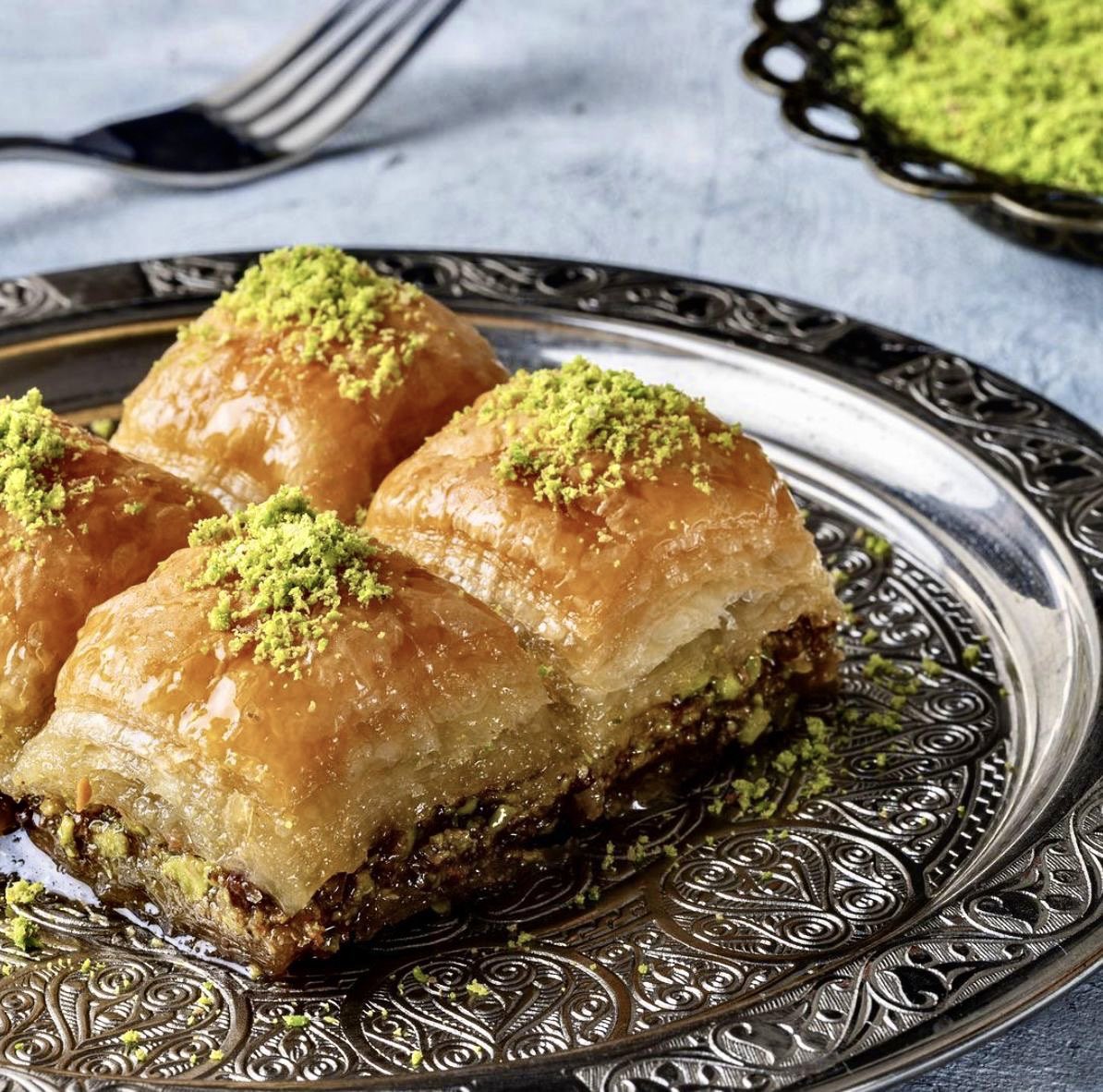
Where does baklava come from? From the Assyrians to the Ottoman palace, and why Greeks, Lebanese and Turks all claim it. Plus baklava by country.
"Is baklava Greek or Turkish?" It's one of the most frequently asked questions about this dessert, and the honest answer is: baklava is older than most of the countries that claim it. It's a shared heritage, perfected in the Ottoman palace kitchens. At Yasemin we make the Turkish version, but the story starts much earlier.
From the Assyrians to the Ottoman palace
According to one account, the Assyrians were already layering thin sheets of bread with nuts back in the 8th century BC, drizzled with honey and baked in wood-fired ovens. But baklava as we know it today took its refined shape in the 15th century, in the kitchens of the Ottoman palace in Istanbul. The oldest mention appears in the kitchen records of Topkapı Palace: baklava was baked there in 1473. For centuries it was a luxury only the wealthy could afford, reserved for festivals and religious occasions. The word "baklava" first appeared in English in 1650, borrowed from Ottoman Turkish.
Is baklava Greek or Turkish?
Both countries claim baklava, and both make a beautiful version. But the layered filo-pastry form we know today was perfected in the Ottoman Empire. The Turkish city of Gaziantep is world-famous for its pistachio baklava and is listed by Unesco for its gastronomy. Greeks make their own version with 33 layers of filo pastry and honey syrup. In short: there's no single "right" country, but there is a shared history in which the Ottomans took the dessert to a new level.
Baklava by country
From the Balkans to Iran, every country has its own twist:
Turkey: pistachio or walnut, often with kaymak, and with ice cream in summer (kaymaklı dondurma).
Greece: 33 layers of filo pastry with honey syrup.
Lebanon: soaked in "atir" syrup with orange blossom and rose water.
Syria: made with the famous pistachios of Aleppo.
Iran: drier, cut into diamond shapes, with rose water and cardamom.
Armenia: spiced with cinnamon and cloves.
Azerbaijan: "pakhlava," cut into diamonds, with an almond or walnut on each piece.
Egypt: made with a special dough called goulash.
The Balkans: a beloved festive dessert, especially during Ramadan and Eid.
Same soul, different hands. Want to know exactly what baklava is and which varieties exist? Read what is baklava. Want to make it yourself? Check out our baklava recipe.
Taste the Turkish table
Baklava is the sweet finish to a Turkish meal. Yasemin delivers 60+ fresh, 100% halal Turkish dishes, chilled and never frozen. Discover the menu.
Frequently asked questions
Which country does baklava come from?
Baklava has no single country of origin. The earliest form is attributed to the Assyrians; the refined version emerged in the Ottoman Empire. Today Turkey, Greece, the Levant, Iran and the Balkans each make their own variation.
Is baklava Greek or Turkish?
Both claim it. The modern layered form was perfected by the Ottomans; the Turkish city of Gaziantep is on the Unesco list for its pistachio baklava.
How old is baklava?
The earliest mentions date back to the 8th century BC; the form we know today dates from the 15th century.
Which country makes the best baklava?
Taste is personal, but Turkish pistachio baklava from Gaziantep is considered the international benchmark.