Knowledge base
Stuffed vine leaves: sarma, dolma or warak enab?
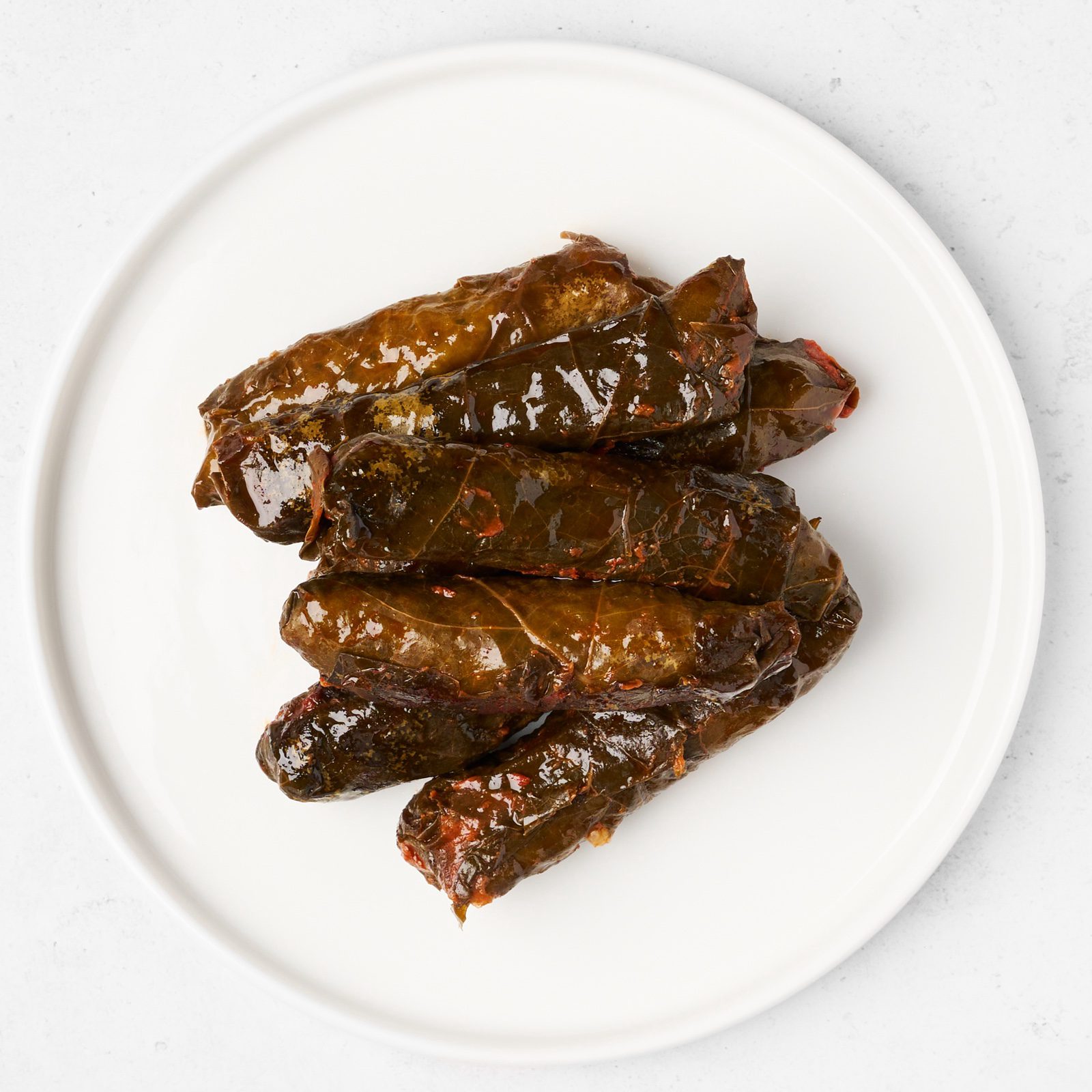
Stuffed vine leaves go by many names: sarma, dolma, warak enab. Which country makes which, served warm or cold, and where to order fresh halal sarma?
At Yasemin, we roll them by hand: fresh vine leaves, filled with rice, herbs and sometimes minced meat, wrapped tightly into small bites. In Turkey we call them yaprak sarma. But travel just one country over and the exact same dish suddenly has a completely different name. Stuffed vine leaves aren't a Turkish secret at all: they belong to a culinary tradition that stretches from the Balkans to the Levant.
One dish, a different name everywhere
From Athens to Beirut, you'll find the same rolled vine leaves on the table, each with its own name and accent:
Turkey: sarma or yaprak sarma (from sarmak, "to roll").
Greece: dolmades or dolmadakia.
The Levant (Lebanon, Syria, Jordan, Palestine): warak enab, literally "vine leaves" in Arabic.
Armenia: tolma.
The Balkans (Bosnia, Croatia, Romania): sarma or sarmale, though cabbage leaves are often used there instead.
Same idea, different kitchen. What they share: a leaf as the wrapper, a savoury filling, and a dish you make with the whole family.
Warm with meat or cold with olive oil
Across the region you'll come across two main variants. The warm version is filled with minced meat and rice and eaten as a main course (etli sarma in Turkish). The cold version is vegetarian, filled with rice, pine nuts and herbs, cooked in olive oil and lemon (zeytinyağlı yaprak sarma). You eat that one cold, as a meze or side dish. Which one you choose depends on the occasion, not the country.
Sarma, dolma or warak enab: what's the difference?
This is the question everyone asks, and the answer lies in the words themselves. In Turkish, sarma means "rolled" and dolma means "stuffed". So sarma are the rolled leaves; dolma are stuffed vegetables like peppers, tomatoes or courgettes. In Greece, the rolled leaves are called dolmades, and in Arabic cuisine, warak enab. In short: it's largely the same dish, only the language differs. You can read more about the Turkish version in what is sarma.
Are stuffed vine leaves healthy?
The cold, vegetarian version is surprisingly light: vine leaves themselves are high in fibre, and the filling is mostly rice and herbs with a little olive oil. The warm version with minced meat is heartier and higher in protein. It's still a dish with oil and rice, so as always: enjoy in moderation.
Make it yourself or have it delivered fresh
Rolling vine leaves is a job: it takes time and patience (just ask any grandmother in the region). Don't feel like rolling for hours, but still craving the real flavour? Yasemin makes fresh, 100% halal sarma according to the Turkish recipe, delivered chilled to your door. Check out our sarma or the full menu.
Frequently asked questions
Which country do stuffed vine leaves come from?
Several. They belong to the cuisines of Turkey, Greece, the Levant, Armenia and the Balkans, each with its own name.
Do you eat sarma warm or cold?
Both work. With minced meat, warm as a main course; with olive oil, cold as a meze.
Are stuffed vine leaves vegetarian?
The olive oil version (zeytinyağlı) is. The version with minced meat isn't.
What's the difference between sarma and dolma?
Sarma is rolled (leaves), dolma is stuffed (vegetables). In Greek, the rolled leaves are called dolmades.